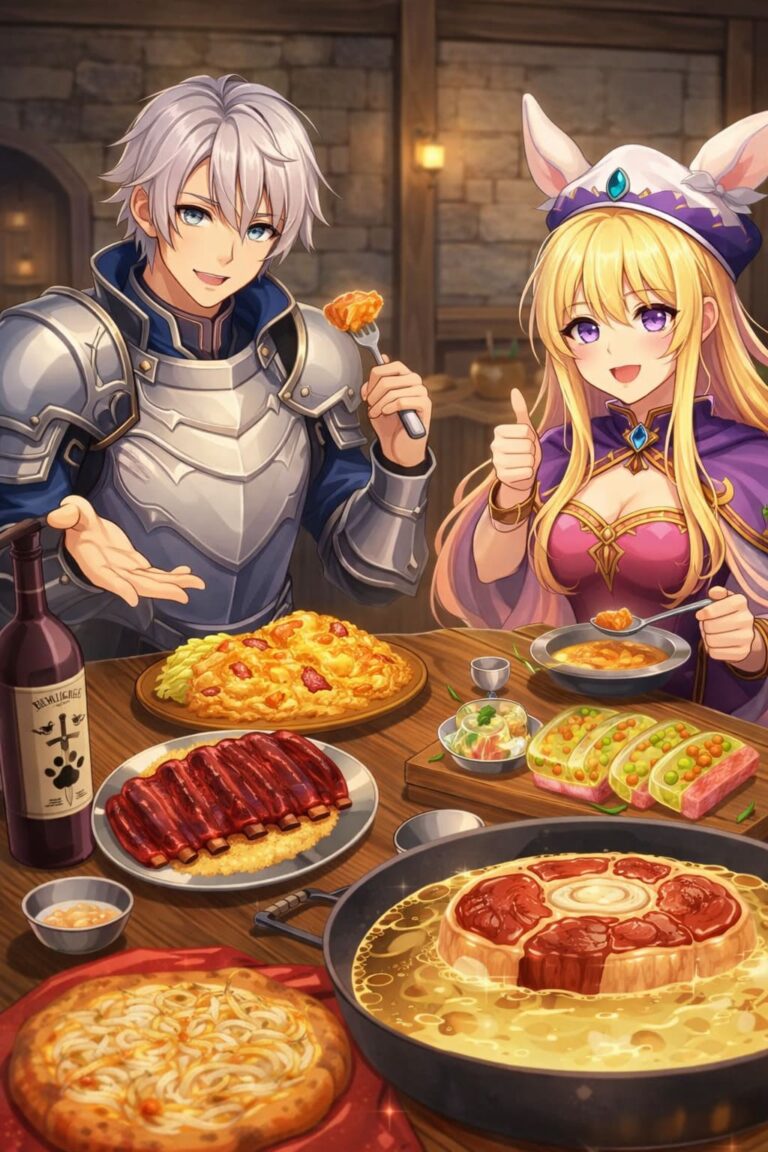
Laios and Marcille Relationship: Romantic Devotion or Platonic Bond in Delicious in Dungeon?
One of the biggest reasons why Delicious in Dungeon became more than just another fantasy anime is how human its characters feel. Beneath the monster cooking jokes, chaotic dungeon runs, and absurd creature designs, Ryoko Kui quietly wrote one of the most believable emotional partnerships in modern anime and manga.
And honestly, I think that’s exactly why the debate around Laios and Marcille exploded across Reddit, Tumblr, YouTube essays, and anime forums after the ending.
People keep asking the same question:
Are Laios and Marcille actually in love, or are they simply incredibly close friends?
After finishing both the manga and anime adaptation, my answer is simple: their relationship works so well because it exists somewhere between those labels. It never feels forced into typical romance tropes, but it also carries emotional intimacy far deeper than ordinary friendship.
That ambiguity is what makes them unforgettable.
A Relationship That Starts With Complete Chaos
At the beginning of Dungeon Meshi, Marcille can barely tolerate Laios.
And honestly, who could blame her?
Laios is socially awkward, hyper-fixated on monsters, and treats horrifying dungeon creatures like an excited biology student discovering a new species. Marcille spends half the early story looking traumatized by whatever insane survival idea he comes up with next.
But that tension is exactly what makes their eventual bond feel earned.
Instead of falling into the usual anime pattern where characters suddenly become emotionally attached after one dramatic moment, Kui lets their relationship evolve slowly through shared experiences:

- Surviving near-death situations
- Cooking and eating together daily
- Learning each other’s fears
- Watching each other fail repeatedly
- Building trust naturally over time
By the middle of the story, Marcille no longer reacts to Laios like he’s an alien creature. She understands him. More importantly, she begins accepting the parts of him that most people reject.
That’s huge for Laios as a character.
Why Laios Is Different From Typical Fantasy Protagonists
A lot of anime protagonists are written to be universally lovable. Laios isn’t.
He’s weird.
Not “quirky anime weird.” Actually weird.
He misses social cues constantly, becomes overly excited about horrifying monsters, and often struggles to communicate emotions in a normal way. In another series, a character like him might become comic relief only.
But Delicious in Dungeon treats him seriously.
Marcille eventually realizes something important: Laios is not uncaring. He simply experiences the world differently. Once she understands that, her frustration slowly transforms into patience, concern, and eventually deep emotional reliance.
That transition feels incredibly authentic.
There’s a reason so many readers connected with their dynamic more than flashy romance-heavy anime couples.
The Succubus Scene Changed Everything
If there’s one moment that permanently fueled the “Larcille” ship online, it’s obviously the succubus sequence.
For many fans, that chapter completely changed how they viewed Laios internally.
Without spoiling every detail again, the succubus manifests using Marcille as the foundation of Laios’s deepest subconscious desire. Even though the form later twists into something monstrous and bizarre — perfectly matching Laios’s monster obsession — the starting point still matters.
And fans noticed immediately.
Why this moment matters:
| Element | Why Fans Analyze It |
|---|---|
| Succubus appears as Marcille | Suggests emotional attachment or attraction |
| Laios reacts instinctively | Indicates subconscious feelings |
| Transformation into monster form | Reflects Laios’s unique psychology |
| Marcille being the “base” image | Implies trust, comfort, and ideal companionship |
Some fans argue the scene represents emotional safety rather than romance.
Personally, I think it’s both.
The beauty of Kui’s writing is that she never simplifies emotions into neat categories. Laios may not understand romantic attraction in a conventional anime way, but his attachment to Marcille clearly surpasses ordinary friendship by the later arcs.
Marcille’s Side Is Even More Interesting
What makes the relationship truly special is that Marcille changes just as much as Laios does.
At first, she’s emotionally guarded, anxious, and constantly trying to maintain control. Underneath her dramatic reactions and magical talent, she’s terrified of losing the people she loves.
That fear becomes one of the emotional cores of the entire story.
Laios slowly becomes someone she can relax around — even when he drives her insane. Their quieter moments together often say more than the dramatic scenes:
- Sitting together after battles
- Casual conversations during meals
- Small expressions of concern
- Silent understanding during emotional moments
These scenes feel domestic in the most natural way possible.
Not exaggerated anime romance.
Not forced fanservice.
Just two exhausted people finding comfort in each other.
The Ending Feels Intentionally Personal
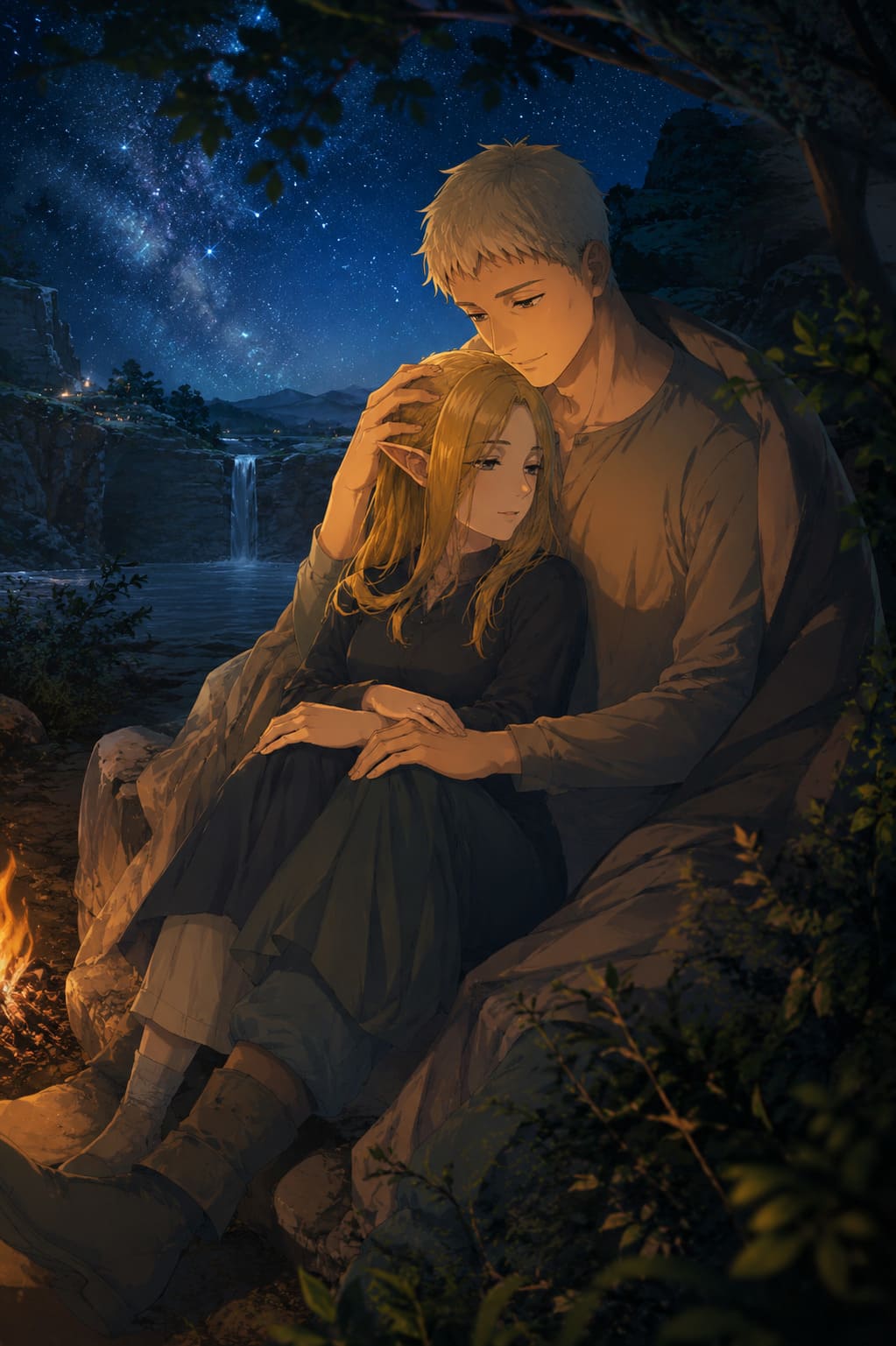
The final chapters are probably why the debate will never truly end.
Ryoko Kui deliberately refuses to give fans a clean “they confessed and got married” conclusion. Instead, she gives something much more mature: lifelong commitment without explicit labeling.
Marcille stays beside Laios after the dungeon’s fall.
She helps him govern.
They continue sharing daily life.
They remain emotionally inseparable.
And honestly, that says more than most anime romances ever do.
A confession scene would have been easy.
Instead, Kui trusted readers to understand emotional intimacy without needing giant flashing signs screaming “THIS IS CANON ROMANCE.”
That restraint is part of why the ending feels so real.
Delicious in Dungeon Season 2: Kabru’s True Intentions and Crucial Role Explained
Why Fans Connect With Them So Strongly
A huge reason the Laios and Marcille relationship became such a massive topic online is because it avoids extremes.
They aren’t:
- overly sexualized,
- constantly blushing,
- trapped in endless tsundere clichés,
- or reduced to romance bait.
Their connection develops through companionship.
That makes it feel closer to real adult relationships than many modern anime pairings.
Whether you interpret them as romantic soulmates, life partners, or inseparable best friends almost doesn’t matter by the end. The emotional foundation remains equally powerful.
And maybe that’s the point.
Final Thoughts
I genuinely think Laios and Marcille represent one of the best-written character dynamics in fantasy anime of the last decade.
Not because the story confirms a romance.
But because it understands something many series forget:
Love is not always loud.
Sometimes love is cooking dangerous dungeon food together for months.
Sometimes it’s staying beside someone even when they completely confuse you.
Sometimes it’s choosing the same person again and again without ever needing to say it directly.
That’s what makes their relationship feel authentic.
And honestly, I’d take that kind of writing over forced anime romance tropes any day.